

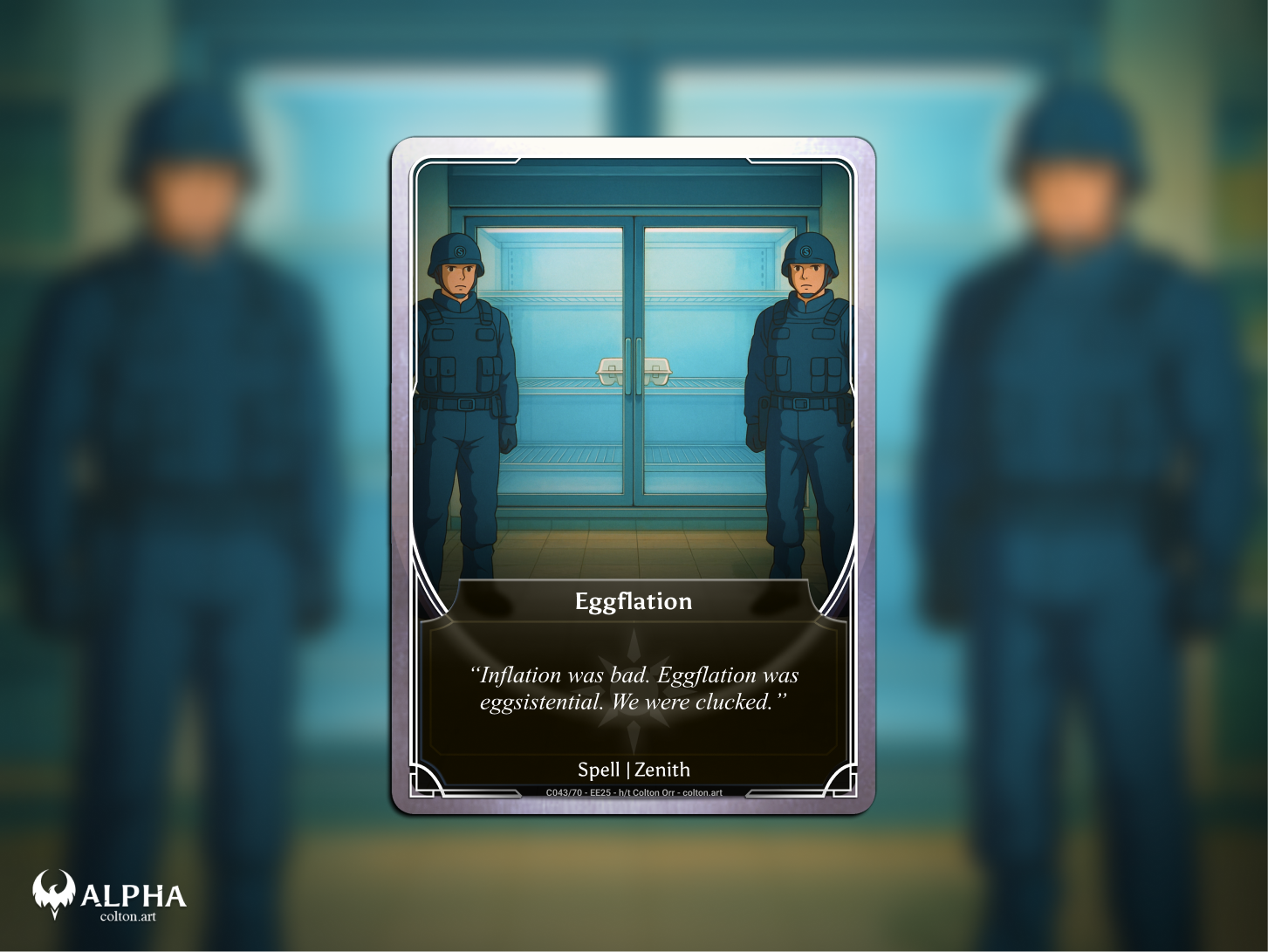
As I shared last week, I’m incredibly excited to debut the first physical booster packs at Edge Esmeralda. A few folks have asked about shipping—yes, I’d love to make these available worldwide soon. I’m bootstrapping and starting small, but orders are absolutely on the roadmap.
Thanks so much for your patience and support 🙏
Naming things is hard (but there are pro strats)
Anyone who's created something meaningful knows naming their project feels like choosing your child's name—it's that important.
My first TCG name was Infinite Garden, named alongside our Ethereum-inspired coloring book. People loved the name, but the Ethereum Foundation gently encouraged a change because they didn’t want the Infinite Garden (originally coined by Aya Miyaguchi) tied to things that cost money.
Then came Ace. Short, punchy, related to cards—perfect, right? Except, turns out everyone else thought so too, making it tough to stand out.
Now, with my current project code-named Alpha Cards, I’m determined to find a name I truly love—one that’s unforgettable.
Naming matters. 77% of consumers make purchases based on a brand name alone. So, here's my toolkit, inspired by legends like Rich Barton (Zillow, Expedia), Ben Brode (Hearthstone), and James Clear (Atomic Habits):
Three core naming strategies
Literal Descriptors
Real words clearly describing your product.
Examples: Hotels.com, Cars.com
Pros: Instantly clear.
Cons: Generic, expensive, tough to trademark.
Repurposed Words
Existing words with a fresh twist.
Examples: Apple, Amazon
Pros: Familiar yet distinctive.
Cons: Generic words that are hard to “own”.
Invented Words (Rich Barton’s favorite)
Made-up words you can fully own.
Examples: Metroid, Hearthstone
Pros: Trademark-friendly, unique branding.
Cons: Requires stronger initial marketing.
More quick naming tips
Short, two-syllable names (sometimes called trochees) are incredibly sticky (think: Apple, Nike, Google, Tesla).
High-value Scrabble letters (Z, X, Q, J) make your name visually striking.
Unique letter patterns or repetition (Reddit, Tenet) boost memorability.
Sound associations (Zillow = pillow) help evoke comfort and trust, but you can use words that capture whatever vibe you’re after.
General principle
The best names are ownable, memorable, and evoke a certain feeling — even if they’re nonsense at first.
Examples I love
(that use some or all of the rules listed above)
Metroid – Inventive and striking.
Minecraft – Short, clear, evokes the game’s mechanics perfectly.
Hearthstone – Fantasy-friendly compound word.
Mistborn – Brandon Sanderson’s books are masterclasses in trochee naming.
Existential Hope – Not short, but consistently gets a “Wow, great name!”
Magic: The Gathering – Breaks rules but successfully owns “Magic.”
Fans inevitably create shorter nicknames anyway:
League of Legends → League
The Legend of Zelda → Zelda
Magic: The Gathering → Magic
Existential Hope → XHope
Bonus framework: naming books
Nonfiction books need clarity rather than vibes. James Clear found these two patterns dominate bestsellers:
"The [Descriptor] of [Topic]" (e.g., The War of Art, *The Subtle Art of Not Giving a F\ck)
"[Contrasting Descriptor] + [Topic]" (e.g., Extreme Ownership, Atomic Habits)
Remember, the best names aren’t just labels—they’re mini-stories.
What's your favorite project or product name—and why does it stick? I'd love to hear your thoughts!
With metta,
Colton
Hey Colton, thanks for sharing the tips, I loved the bite-sized learnings :)
Recently, my favorites have counter-intuitive names (according to other 'principles' for naming): Severance, Mad Men, NotebookLM. They are counter-intuitive because they don't necessarily carry a positive aspiration and might look complicated, but I guess after trying these products and enjoying them - the name meant less and started to have other meaning (severance is now the series for me, and mad is from 'madison avenue').
But I like: Earthbound, Black Mirror, MetaMask. They fit the tips you gave in the email, and carry strong words (bound, mirror, mask).